Tuesday, December 20, 2005

For couples having difficulties getting pregnant, the delay in conception may affect their baby's sex

In the study, published in the BMJ, researchers compared information on more than 5,000 Dutch women who gave birth between July 2001 and July 2003.
Among the 498 women who took longer than one year to get pregnant, the percentage of male babies was over 57 percent, compared with 51 percent among the women who took less time to get pregnant.

The proportions of X and Y chromosome bearing sperms in human semen are equal, but more boys than girls are born. Male embryos and fetuses have a greater risk of attrition in utero than their female counterparts, and therefore male excess is likely to be still larger at the time of conception. It remains unexplained, however, what is responsible, presumably at some point between insemination and conception, for the greater probability of Y bearing sperms fusing with the ovum.

Because for couples using fertility treatments in this study there was no link between time to pregnancy and the babyÂ’s sex, the authors arehypothesizingg that it is the fact that y bearing sperms may be better swimmers through thick cervical mucus. I would say interesting hypothesis but still untested.

Thursday, December 15, 2005

Soy and fertility report

apparently soy contains a chemical that kills sperm

A natural chemical found in soy, tofu and legumes can potentially damage sperm and lower men's fertility, Reuters reports of new research from King's College London.

The plant chemical, genistein, mimics the effect of the female hormone estrogen and in turn affects sperm in laboratory mice. Tests in humans have shown an even stronger impact than in the rodents. Research leader Lynn Fraser found in lab tests that small amounts of genistein can cause human sperm to "burn out" and lose fertility, reports Reuters
check out the full article


Infertility Boosts Testicular Cancer Risk?


Interesting report from yahoo news

Compared to males in the general population, infertile men, or men with abnormal sperm counts, are 20 times more likely to develop testicular cancer, a new study finds.

It does make sense. Thats why i frequently recommend that patients with abnormal semen see a urologist
Korean cloning paper a fake?

The Associated Press reports that a doctor who provided human eggs for research by cloning pioneer Hwang Woo-suk said in a Thursday broadcast that the South Korean scientist admitted that most of the stem cells produced for a key research paper were faked.

Roh Sung-il, chairman of the board at Mizmedi Hospital, told KBS television that Hwang had agreed to ask the journal Science to withdraw the paper, published in June to international acclaim. Roh was one of the co-authors of the article that detailed how individual stem cell colonies were created for 11 patients through cloning.

Roh also told MBC television that Hwang had pressured a former scientist at his lab to fake data to make it look like there were 11 stem cell colonies.

Reuters also reports
that

The daily newspaper Hankyoreh and three South Korean television networks quoted Roh Sung-il as saying that he, stem cell scientist Hwang Woo-suk and another co-author of the landmark 2005 Science paper on tailor-made stem cells had notified the journal that they were withdrawing the paper.

"Professor Hwang admitted to fabrication," Roh said in an appearance on MBC television. Roh, a specialist in fertility studies, was referring to a meeting he had with Hwang earlier in the day.
last minute

Wednesday, December 14, 2005

Another chapter in the Korean cloning saga

Another article appeared today questioning the work of Korean scientist Hwang Woo-suk. He is the head scientist of the group that recently reported the first ever clonig of a dog in a paper on the journal Nature.

The current debate stems from inconsistencies in the article published in the journal Science titled "Patient-specific embryonic stem cells derived from human SCNT blastocysts". In the publication the team claimed that it had established Eleven hESC lines by somatic cell nuclear transfer (SCNT) of skin cells from patients with disease or injury into donated oocytes. Basically this is what we call "Therapeutic Cloning". All the authors were from Korea with the exception of Dr. Schatten from the US . Dr. Schatten recently made a number of public statements with regards to breaches in ethical standards such as not disclosing the fact that some of the lab techs from Dr. Woo-suk lab donated the eggs .
This is the clear example of a situation in which if one lies (or fails to disclose) on any aspects of a research project (even on things that may be immaterial to the final results) the whole research project becomes vulnerable to criticism.

Sunday, December 11, 2005

A Surrogate Dries Her Tears

Interesting article on yesterday's NYT. It's titled "A surrogate dries her tears" . But anybody who knows what surrogacy is would quickly figure out that what this woman did is not traditional surrogacy.
What she did is she got impregnated using donor sperm and HER OWN EGGS and subsequently gave the baby to a couple (they happened to be 2 gay men). So she basically GAVE HER OWN GENETIC BABY UP FOR ADOPTION.
No kidding she felt attachment to the baby! Everybody knows that the way to do this is to use donor eggs to create the embryos so that the surrogate is not carrying her own genetic child.
In any case the article is interesting and it points to a very good reference website called surromomsonline.com.

Saturday, December 10, 2005

Does rest after intrauterine insemination help?

I was always doubtful of this and patient frequently ask me the question. So I did a little search and found this interesting article:

A randomized study of the effect of 10 minutes of bed rest after
intrauterine insemination


Objective: To evaluate the effects of 10
minutes of
bed rest after intrauterine insemination (IUI) on the pregnancy
rate.
Design: Prospective randomized study.

Intervention(s): Patients were
prospectively randomized
either to immediate mobilization after IUI (group
I) or to remain in a supine
position for 10 minutes after the procedure
(group II).

Main Outcome
Measure(s): Cumulative pregnancy rate.

Result(s): Ninety-five couples
were included in the analysis. Group
I consisted of 40 couples (90 cycles), and
group II consisted of 55 couples
(120 cycles). The pregnancy rate per couple in
group I (4 of 40 [10%]) was
significantly lower than in group II (16 of 55
[29%]). The pregnancy rate
per cycle in group I (4.4%) was also lower than in
group II (13.3%). With
use of life-table analysis, the cumulative probability of
pregnancy in group
II was significantly higher than in group I.

Conclusion(s): A 10-minute
interval of bed rest after IUI has a positive
effect on the pregnancy rate.

Although it is only one study it is pretty convincing . Additionally it does not seem much of a sacrifice to wait for an additional 10 minutes after having waited for 2 hours in the doctor's waiting room!

The Femara Scare (Now Resolved!)
(Read all way to bottom of article)

Femara (letrozole) has been widely used off label in the recent years for ovulation induction by fertility doctor nationwide.
News Media have been reporting that the

Swiss drug manufacturer Novartis is sending letters to fertility doctors worldwide to reiterate a warning that the drug should not be given to women who may be pregnant, said spokeswoman Kim Fox.

The U.S. label on the drug already warns that it has been associated with birth defects, but concerns arose when a researcher in Canada published a report noting cases where the drug had been given to pregnant women.

Here is the abstract of the report presented at the conference

[O-231] The Outcome Of 150 Babies Following The Treatment With Letrozole Or Letrozole And Gonadotropins.

M. M. Biljan, R. Hemmings, N. Brassard. Montreal Fertility Centre, Montreal, PQ, Canada; St'Mary's Hospital, Montreal, PQ, Canada; Université Laval, Québec, PQ, Canada

Objective: Letrozole is a medication widely used for secondary breast cancer prevention. Recently, this aromatase inhibitor has been used for ovulation induction. In this analysis we report the outcome of 150 babies born as a result of treatment with either letrozole alone or a combination of letrozole and gonadotropins at the Montreal Fertility Centre. Design: Retrospective analysis. Materials and Methods: This analysis includes patients with unexplained infertility and patients with polycystic ovarian disease. As a control group we used patients delivered at “St. Mary’s” hospital in Montreal between 1995 and 2004. The choice of the hospital was deliberate, as “St. Mary’s” hospital delivers mostly low risk babies. Results: During a period of 25 months 171 babies were born as a result of the use of letrozole or letrozole and gonadotropins. Twenty one babies were lost for follow-up. One hundred and fifty babies were compared with a data-base of normal deliveries containing 36,050 deliveries. The median age (M) of treated patients was 35.2 years (interquartile difference (IQD)= 31.4-37.9). We had 110 singleton and 20 twin pregnancies. All twin pregnancies apart of one were conceived following the treatment with letrozole and gonadotropins. The incidence of vaginal bleeding was 36.7% in the first trimester, 7.3% in the second trimester, and 1.3% in the third trimester. Seventy-seven non-diabetic singleton pregnancies were delivered at term. There was no difference in weight between this group and the control. Twenty patients had gestational diabetes. Seventeen patients with gestational diabetes delivered at term. When compared with controls these babies were of a significantly lower birth weight than controls (p<0.002 ci="11.3-136.6)." p="0.25" ci="0.78-4.71)." p="0.0005" ci="2.64-27.0)" p="0.0006" ci="3.30-58.1)">

Although this finding needs to be taken very seriously we need to review the data. this is only an abstract and it is not clear from the abstract what the specifics are about the cardiac and locomotor malformations. Also remember that this is a retrospective study.
I am a bit puzzled by the fact that it is known that Femara has a half life of 2 days so all of it should be out of the body by the time a pregnancy is established therefore there is no clear biological reason on why any effect should be seen .

A Follow Up to This study was announced in 2006 and reversed the findings

Concerns about the use of letrozole, an easy-to-use and inexpensive drug for the treatment of infertility, appear to be unfounded, according to a major study co-authored by Dr. Togas Tulandi, Director of the Division of Reproductive Endocrinology and Infertility, McGill University Health Centre (MUHC), Chief of Obstetrics and Gynecology at the Jewish General Hospital and professor of obstetrics and gynecology at McGill University. The findings, which are currently available in an early online edition of Fertility and Sterility, showed that babies whose mothers were treated with letrozole had the same rate of birth defects as those whose mothers were treated with clomiphene citrate — the low-risk, first-line treatment for infertility for more than 40 years.

"We found no statistically significant difference in the overall rates of major and minor malformations or chromosomal abnormalities between newborns in the two groups," says Dr. Tulandi. "Our findings indicate concerns about a link between letrozole and birth defects are unfounded. This is significant because it confirms that letrozole can indeed be used in the treatment of infertility without increasing risk to the fetus."

The study contradicts an earlier, much smaller study linking letrozole to increased rates of inherited malformations. This study led to widespread concern about the use of letrozole, a drug which has been widely used in the treatment of infertility in recent years.

"There were several methodological problems with the earlier study," says Dr. Tulandi. "For one thing, it compared the incidence of birth defects in children conceived spontaneously with that in children conceived through fertility treatments using letrozole. This is an apples-and-oranges comparison, because there are always fewer birth defects in children conceived spontaneously." The earlier study also compared different age groups between the control and treatment.

The new study, by Dr. Tulandi, Dr. Robert Casper from the Department of Obstetrics and Gynecology at the University of Toronto, and their co-authors examined a total of 911 babies whose mothers were treated for infertility with either letrozole or clomiphene citrate from 2001 to 2005. Five Canadian centres in Quebec and Ontario participated.
(adapted from Press Release)


Letrozole is currently back in my practice!

Friday, December 09, 2005

Yet another celebrity undergoing advanced fertility treatments!

People reported a couple of days ago that Angela Bassett (47) is expecting twins via a surrogate carrier.

"They are expecting twins via a surrogate," says a source close to the 47-year-old star of How Stella Got Her Groove Back and What's Love Got to Do With It.

The source adds: "The babies are due in a couple months."

A publicist for Bassett had no comment.
Now they are not commenting on the source of the oocytes but we can speculate that the source of the oocytes is from an oocyte donor. Obviously this is just speculation but at 47 twin pregnancy would be an extremely unusual event.
this is the typical example of a situation in which celebrities while (rightfully) trying to protect their privacy end up creating false expectations for the public. I would equate it to the statement " I did not have plastic surgery".

Disclaimer
What's the deal with this blog (PLUS A LITTLE DISCLAIMER)?

Every day (or whenever I am able to, given the fact that I work abut 20 hours a day) I will post articles relative to the world of infertility. These will be scientific articles or articles of general interest. The articles will contain comments edited by me.

The goal of this blog is to expand the knowledge of the readers in the area of infertility and advanced reproductive technologies.

Now here is the disclaimer: THE SELECTION OF ARTICLES AND LINKS ARE BASED ON MY PERSONAL OPINIONS AND SCIENTIFIC INTERESTS. IN NO WAY THIS IS MEANT TO BE MEDICAL ADVICE OF ANY KIND. SO IF YOU ARE SUFFERING FROM INFERTILITY I ADVISE YOU TO CONTACT YOUR DOCTOR.
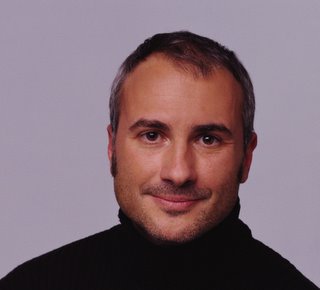
Dr. Andrea Vidali


Andrea Vidali, M.D.
is a partner at American Fertility Services, P.C., which has locations in Manhattan and Hackensack, NJ. At each of these sites he oversees and performs advanced reproductive technologies. Dr. Vidali is also Director of the Reproductive Endocrinology and Infertility Division at Hackensack University Medical Center in Hackensack, NJ, and Director of the Reproductive Endocrinology and Infertility Division at Saint Vincents Catholic Medical Center in New York City. An accomplished laparoscopic surgeon, Dr. Vidali is also Director of the Advanced Laparoscopy Surgery Division at St. Vincents, where he routinely performs operations such as laparoscopic hysterectomy, laparoscopic myomectomy, and excision of severe endometriosis.

Since completing his medical degree at the University of Padova, Italy, Dr. Vidali has focused his career on male and female infertility, reproductive endocrinology, and advanced laparoscopic surgery. After medical school Dr. Vidali completed a two-year postdoctoral fellowship in molecular biology at the National Institute for Cancer Research in Italy. He completed his residency in obstetrics and gynecology at Georgetown University Hospital, in Washington, D.C., followed by a fellowship in reproductive endocrinology at Columbia University College of Physicians & Surgeons.

Dr. Vidali consults and lectures on infertility and in vitro fertilization (IVF) around the world. His research interests include endometriosis, laparoscopic aspects of infertility, and male infertility, in particular azoospermia. Collaborations with academic institutions in Europe and South America allow him to share his expertise with other physicians in the world of infertility. In Brazil, he has been awarded the title of Visiting Professor for his work in teaching laparoscopic surgery by the Hospital Das Clinicas, San Paulo. In Italy, Dr. Vidali collaborated with leading researchers to develop a new model for oocyte freezing.

Dr. Vidali is an active member of the American Society for Reproductive Medicine (ASRM), Society of Laparoendoscopic Surgeons (SLS), European Society of Human Reproduction and Embryology (ESHRE), International Society of Gynecological Endoscopy (ISGE), RESOLVE, and International Council on Infertility Information Dissemination (INCIID). He speaks fluent Italian, Spanish, and Portuguese.